
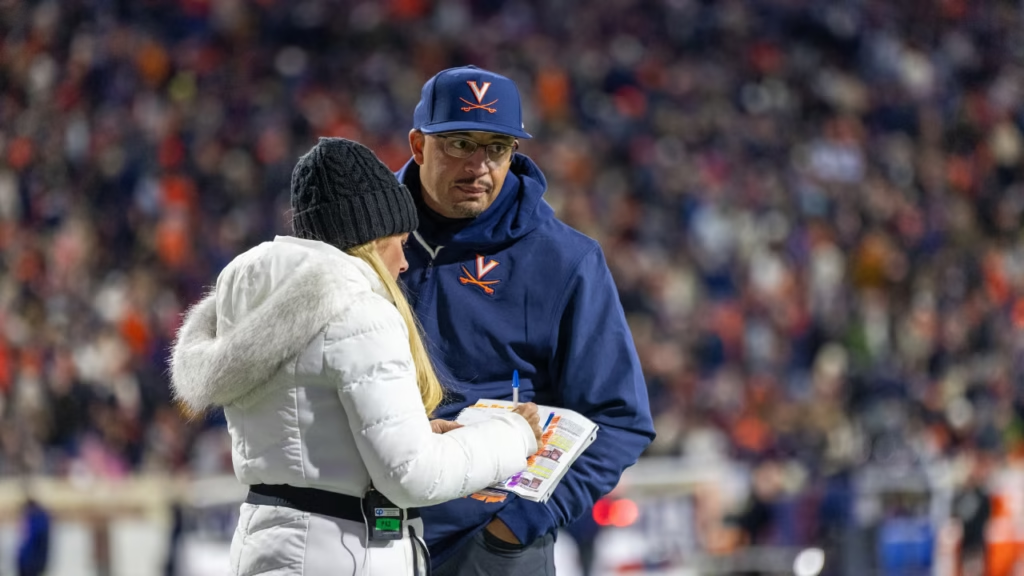
When Tony Elliott signed through 2030, UVA wasn’t just rewarding a strong season. It was choosing direction. For years, Virginia football has lived in cycles, momentum followed by resets, promise that never quite turned into something lasting. This move feels different because it isn’t about hoping things work, it’s about committing to what already is starting to.
Still, this extension signals something UVA has lacked for years, stability with purpose. Not patience for the sake of patience, but commitment to a clear identity and a coach who has grown into the role.
That growth is clear. Elliott’s early tenure felt urgent, almost frantic at times, with a sideline presence that mirrored a program searching for footing. Every moment carried weight, and it often felt like progress was being forced. What you see now is a steadier version, one who manages the game instead of reacting to it, one who leads with control instead of emotion.
That shift shows up in the team. The composure in close games, the ability to respond instead of unravel, the confidence that builds over four quarters, those are reflections of leadership. UVA no longer looks like it’s hoping to win, it looks like it expects to. That’s the difference between chasing results and building something that lasts.
The idea of a “model program” sits at the center of Elliott’s vision. Develop players, retain your core, add the right portal pieces, and avoid the yearly reset. That only works if there is belief behind it, and belief requires real stability. A short-term approach can’t support that. A long-term commitment can.
This is where the extension connects directly to what happens on the field. Players are more likely to stay when they trust the direction. Recruits are more likely to buy in when they see continuity. The portal becomes a tool instead of a lifeline when you are adding to a foundation instead of replacing one. Everything Elliott has talked about building becomes more realistic when the timeline matches the plan.
Last season offered a glimpse of that alignment. Close games became wins. Depth mattered. Players improved as the year went on. Those are signs of structure, not luck, and early returns of the model taking hold. The extension doesn’t create that, it allows it to continue.
There is a different kind of challenge that comes with all of this. Stability raises expectations. Success brings attention, internally and externally, and sustaining it becomes the next test. Jack touched on this in the last podcast, the idea that once you arrive, the game changes. Opponents prepare differently, players who develop become targets, and the margin for error tightens. That is where programs either confirm their identity or fall back into old patterns.
UVA is betting this time will be different. Not because of one season, but because of the foundation underneath it and the coach guiding it. Elliott is no longer trying to prove he belongs, he’s operating with clarity about what he’s building. That’s what turns stability into something meaningful.
The extension through 2030 doesn’t guarantee wins, but it guarantees opportunity. It gives UVA the chance to build without interruption, to see the model through instead of restarting before it takes hold. If that continues, this won’t just be remembered as keeping a coach.
It will be remembered as the moment UVA stopped resetting, and finally started sustaining.